
Event #1 - How do we learn to practice?
Practicing Practice(s)
Event #1 - How do we learn to practice?
What is a ’practice’? Anchored in this deceptively simple question, this inaugural event opens a space for inquiry into the relationship between art, labour, and education.
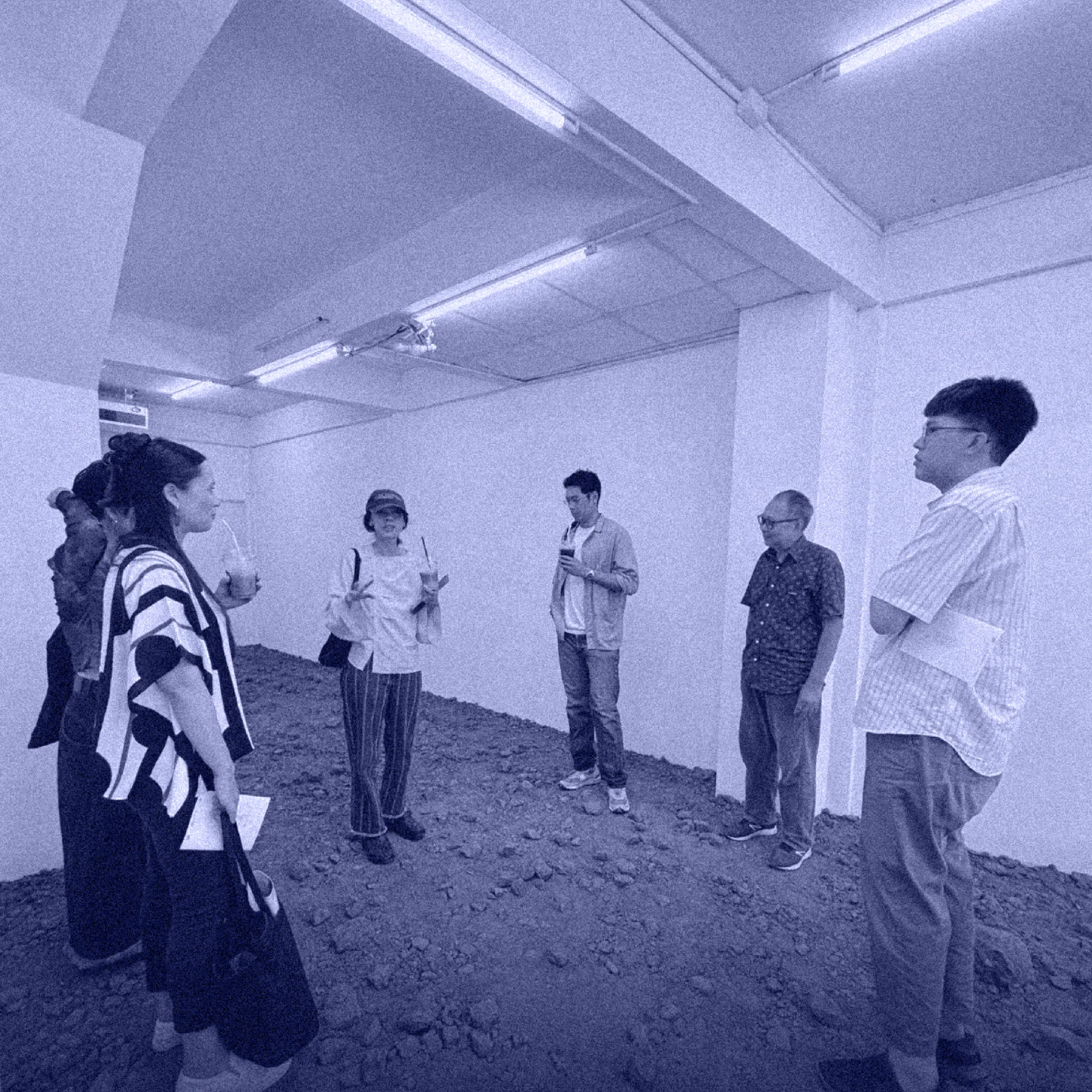
Keynote:
Sepake Angiama (Artistic Director, Institute of International Visual Arts, London)
Round-table discussion:
Moderated by Thanavi Chotpradit, Assistant Professor, Critical and Curatorial Studies of Contemporary Art (CCSCA) National Taiwan University of Education
Panelists:
Nipan Oranniwesna (artist, Bangkok), Sina Wittayawiroj (Alien Art Space, Khon Kaen) and Rinrada Na Chiangmai (curator, Jim Thompson Art Center, Bangkok)
Schedule
10.30: Registration
11.00: Keynote address by Sepake Angiama
Lunch break
14.00 - 17.00: Roundtable discussion led by Thanavi Chotpradit and panelists
Sepake Angiama, in her keynote address, considers what ‘practice’, ‘response’ and ‘support’ looks like for an arts institution, considering the constantly shifting landscape of artistic, education, community and social practices. She asks how we examine artistic production that transforms and utilizes market value to create new forms of labor as artistic ecologies - regenerating land, creating differing learning environments that builds community and thus invests in re-shaping schools, archives and libraries, for example. She asks how we can consider arts institutions that hold these relationships with artists, communities and the public, grounding lived experience as forms of knowledge that develops and respects artists and their methods, through critical thinking, speaking, listening and conversation.
The afternoon ‘round-table’ will be dedicated to a cross-generational conversation bringing together Thai artists, curators, and educators to unpack how “practice” is shaped, taught, and valued within contemporary art contexts in Thailand’s rapidly evolving art ecology. Conceived as an afternoon of collective reflection, this round-table will be deliberately open, allowing the conversation to expand beyond invited speakers, to be shaped inclusive of those attending, through shared anecdote and exchange of perspective.
Why Practice? Practice is long understood as the training and refinement of skills within a particular medium, unfolding in divergent ways, often within designated space and place, in pursuit of mastery, or as experimentation, without a predetermined end. How one practices is therefore not neutral, but a question of agency.
Acknowledging skill and medium-based framings as but one mode of practice, we also encounter conceptual artistic, curatorial, as well as collective or social practices that illustrate longer-standing shifts away from single artworks, instead favouring processes and modes of doing or supporting, that are provisional or ongoing. Thus ‘practice’ cuts across material and immaterial forms, across approaches reliant on traditional sites of production and exhibition, as well as those that take place beyond such settings. The breadth of such reference leaves little doubt as to the ubiquity of the term ‘practice’, yet this ubiquity also demands scrutiny.
When practice is referred to as a group of works or projects, or a term indicating the life-span of a single artist—or even of collectives framed as unified entities—does it also operate as a neoliberal category? Does “having a practice” function as a way to tell a story about ourselves as artists, curators, supporters - thus a way to organise, make coherent and, ultimately, make us legible to local and foreign markets and institutions?
Given the expanding landscape of arts education and training in Thailand—across both formal institutions and newer professional development initiatives—this event also invites participants and audiences alike to interrogate the distinction, if any, between an arts or cultural ‘practitioner’ and a ‘professional’. This event offers the opportunity to study the processes of such categories and how they are produced, maintained, valued or contested. Is the act of practising alone sufficient to confer professional status, or is ‘professionalism’ granted through other mechanisms such as peer recognition, economic metrics, and institutional visibility?
In sum, this event asks what prevailing ideas of practice operate in Thailand today—how do such ideas shape what contemporary art and its ecologies come to look like?; What other imaginings of practice might unfold alongside them?
Key Info
Date: 25 April, 2026
Time: 10.30 - 17.00
Venue: Silpakorn University, Phra Phrombhichitr Architecture and Art Gallery (Parking is limited) : Google Map
Language: English and Thai, with simultaneous translation
Free of charge. Advance registration recommended; walk-ins are also welcome.
Organized By
In Collaboration With